
Digital X-Rays in Coconut Creek, FL
Digital X-Rays Near You
Not every dental problem is visible when looking inside your mouth. Changes between teeth, beneath existing restorations, or around tooth roots may need a closer look. At Quality Dentistry, we use digital X-rays in Coconut Creek, FL, to provide information that a visual exam alone can’t.
If you are looking for digital X-rays near you, we use imaging as part of a thorough diagnostic process. We review the images alongside your examination, symptoms, and dental history.
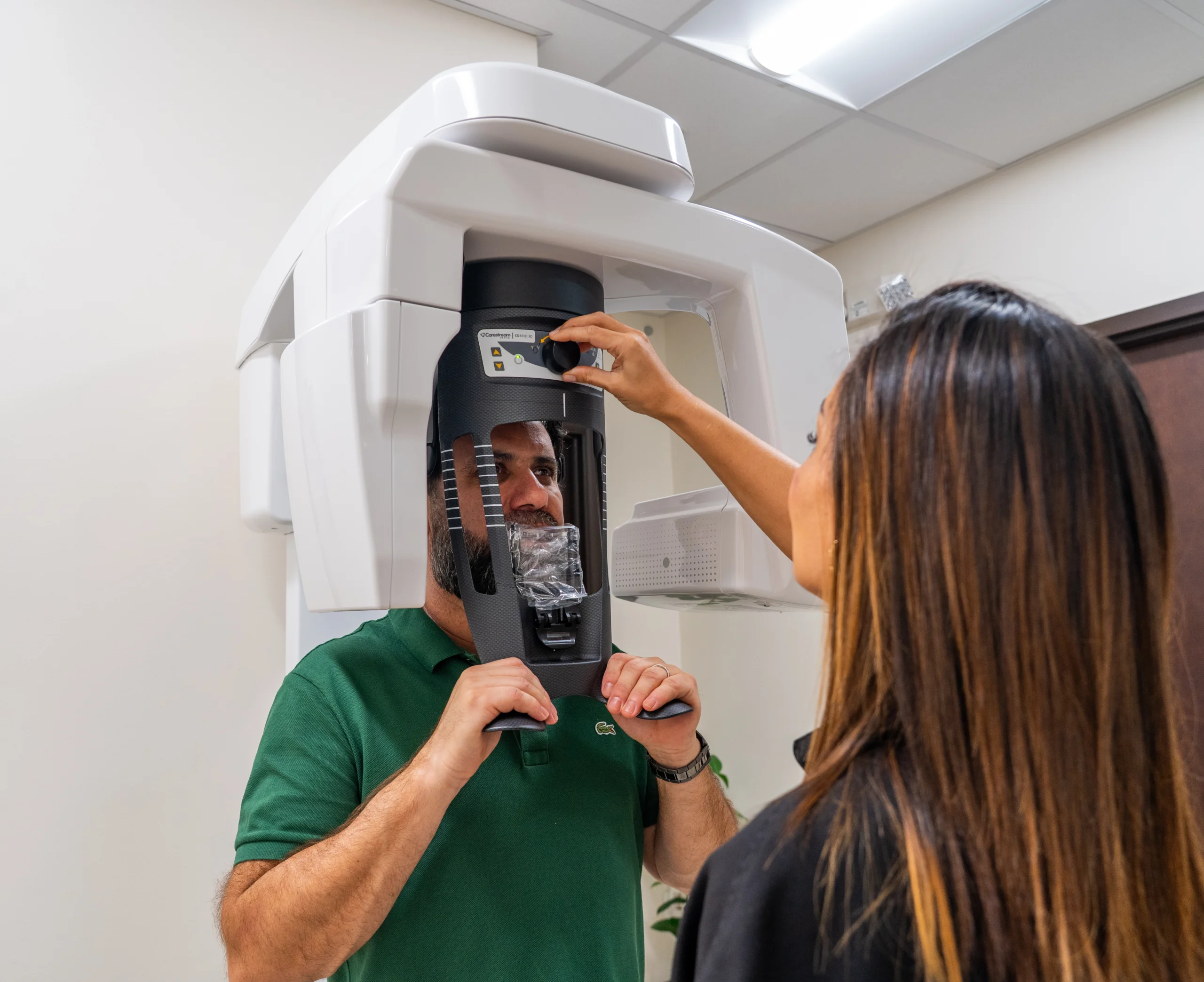
What Are Digital X-Rays?
Digital dental X-rays create images of your teeth and surrounding structures using electronic sensors rather than traditional film. The images are available quickly and can be enlarged or adjusted on a screen to help us examine specific areas.
When you visit our dentist in Coconut Creek, FL, we determine whether X-rays are necessary based on factors such as your symptoms, dental history, age, risk of dental disease, and current oral health. You do not necessarily need X-rays at every appointment.
Digital X-rays support diagnosis rather than replace a clinical examination. Together, they can give us a more complete picture of your oral health.
When Might You Need Digital X-Rays?
You may need dental X-rays during a routine evaluation or when we are investigating a particular concern. Consider visiting a dentist near you if you have:
Persistent or unexplained tooth pain
Sensitivity that has recently developed
A suspected cavity between teeth
Swelling around a tooth or gum
A cracked or damaged tooth
Problems with an existing restoration
Concerns involving a tooth root
A need for certain restorative or other dental treatments
X-rays may also be useful when you have no symptoms. Some dental conditions can develop quietly and may not be visible during a regular examination.
What Are the Benefits of Digital X-Rays?
Revealing hidden areas
Images can show portions of teeth and surrounding structures that are difficult to see.
Supporting earlier diagnosis
Certain cavities and other changes may be identified before they become obvious.
Providing immediate images
Digital images are available for review shortly after we take them.
Helping with treatment planning
X-rays can provide useful information before certain procedures.
Tracking dental changes
We can compare current images with previous ones.
Making findings easier to explain
Images can help you see the areas we are discussing.
If you are looking for digital X-rays near you, we use imaging when it can provide information that is relevant to your care rather than taking X-rays without a clinical reason.
What Happens When Digital X-Rays Are Taken?
Taking dental X-rays is usually straightforward. The type and number of images depend on what we need to evaluate.
The process may include:
Reviewing your needs
We consider your dental history, symptoms, and previous imaging.
Positioning the sensor
For many common dental X-rays, we place a small digital sensor inside your mouth.
Taking the image
You remain still briefly while we capture the X-ray.
Repeating when needed
We may use different positions to view several teeth or areas.
Reviewing the results
We can examine the digital images shortly after taking them.
Explaining relevant findings
We show you areas that may need treatment, monitoring, or further evaluation.
If you have a sensitive gag reflex or difficulty holding an intraoral sensor, let us know. We can take this into consideration during the appointment.
What Can Digital X-Rays Detect?
Cavities between teeth
Decay beneath some restorations
Changes around tooth roots
Bone levels around the teeth
Impacted or unerupted teeth
Certain infections or abnormalities
Problems related to previous dental treatment
An X-ray finding does not always mean you need treatment immediately. We interpret the image together with your symptoms, examination, dental history, and other relevant information before making recommendations.
Are Digital Dental X-Rays Safe?
Dental X-rays use ionizing radiation, so we recommend them only when the expected diagnostic benefit justifies the exposure. Digital dental imaging generally uses relatively low radiation doses.
X-ray frequency should reflect your individual needs rather than follow the same schedule for everyone. Someone with a history of frequent cavities or an active dental concern may need imaging at different intervals than someone with a low risk of dental disease.
You are welcome to ask why we recommend an X-ray and what information we expect it to provide.
Why Choose Quality Dentistry for Digital X-Rays?
When you visit us, you can expect:
Imaging based on clinical need
We recommend X-rays based on your symptoms, oral health, dental history, and treatment needs, rather than taking them automatically.
Whole-mouth and conservative care
Dr. George Sifain considers how your teeth, gums, bite, existing dental work, and overall oral health fit together and recommends only treatment with a clear purpose.
Advanced digital dentistry
We use digital radiography, intraoral cameras, digital scanning, and CBCT imaging when appropriate.
Radiologist review for CBCT scans
We can send CBCT scans to a licensed dental radiologist for independent review and a written diagnostic report.
Personalized, unhurried care
We take time to review the images with you, explain what they show, and answer your questions without rushing the conversation.
Care for anxious patients
We provide calm, respectful, and judgment-free care for patients who feel nervous about dental visits or diagnostic procedures.
Get a Clearer Picture of Your Dental Health
Sometimes an examination tells us only part of the story. At Quality Dentistry, we use digital X-rays in Coconut Creek, FL, to provide additional information when we need to investigate areas that we cannot see directly.
Contact us today to schedule an appointment. We can evaluate your oral health and determine whether digital dental imaging is appropriate for your needs.
FAQs
Do I need X-rays every time I have my teeth cleaned?
No. We determine the timing of dental X-rays based on your oral health, history, symptoms, and individual risk factors.
Can I refuse a dental X-ray?
Yes. You can discuss any concerns with us before we take an X-ray. We can explain why we recommend the image and what information it may provide.
What is the difference between a regular dental X-ray and a CBCT scan?
Routine dental X-rays provide two-dimensional images. CBCT creates three-dimensional images of the teeth and surrounding structures and may be useful when we need more detailed information for diagnosis or treatment planning.
Should I tell you if I might be pregnant?
Yes. Let us know if you are pregnant or think you may be pregnant. Dental X-rays can be taken during pregnancy when they are clinically necessary, and we can explain why we recommend the imaging before proceeding.
Can digital X-rays show gum disease?
X-rays can provide information about bone levels around the teeth, which can help us evaluate periodontal disease. We also need to examine your gums clinically.