
Root Canal Therapy in Coconut Creek, FL
Root Canal Therapy Near You
A persistent toothache can make it difficult to eat, sleep, or concentrate on much else. Sometimes that pain comes from inflammation or infection inside the tooth, which a regular filling cannot treat. At Quality Dentistry, we provide root canal therapy in Coconut Creek, FL, to treat the affected tissue inside certain teeth and, when possible, preserve the natural tooth.
If you are looking for root canal therapy near you, we first need to determine what is causing your symptoms. Tooth pain can have several causes, so an examination and appropriate diagnostic imaging help us decide whether root canal treatment is actually necessary.
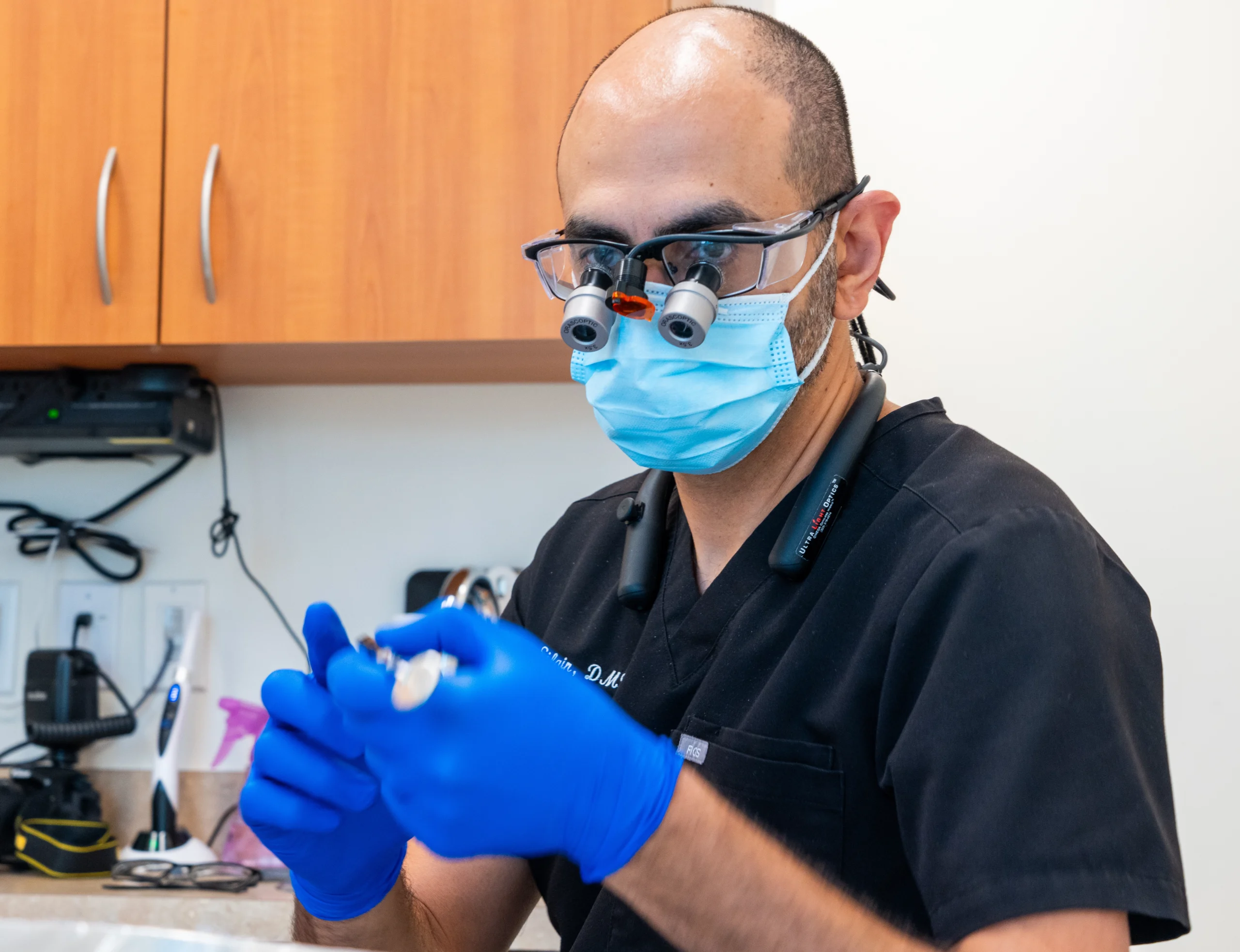
What Is Root Canal Therapy?
Inside each tooth, there is a space containing dental pulp, which includes nerves, blood vessels, and connective tissue. Deep decay, cracks, trauma, or other damage can inflame or infect this tissue.
Root canal therapy removes the inflamed or infected pulp, cleans and disinfects the inside of the tooth, and seals the space. We then restore the tooth so it can continue to function.
An examination by our dentist in Coconut Creek, FL, can help determine whether the pulp is involved or whether your symptoms are coming from another dental problem.
When Might You Need Root Canal Therapy?
Not every toothache leads to a root canal. However, some do require a prompt visit to the dentist.
Consider seeing a dentist near you if you experience:
Severe or persistent tooth pain
Lingering sensitivity to hot or cold
Pain when biting or chewing
Swelling near a tooth
A pimple-like bump on the gums
A tooth that has become unusually dark
A deeply cracked or damaged tooth
Symptoms that return after temporarily improving
Some teeth that need treatment cause few symptoms, which is another reason regular dental examinations are important.
What Are the Benefits of Root Canal Therapy?
When we can successfully treat and restore a tooth, root canal therapy may allow you to keep it rather than remove it.
Potential benefits include:
Treating inflamed or infected tissue
Root canal therapy removes the affected pulp from inside the tooth.
Preserving the natural tooth
Treatment may prevent the need for extraction when the tooth is otherwise restorable.
Relieving symptoms
Treating inflamed or infected pulp can help relieve pain.
Restoring function
After treatment and restoration, the tooth can function normally again.
Controlling infection
Treatment removes infected tissue and helps prevent the infection from progressing.
Avoiding a new gap
Keeping the tooth means you don’t need to replace an extracted tooth.
We explain why we recommend the procedure and what the tooth may need afterward.
How Does the Root Canal Therapy Process Work?
Before treatment begins, we assess whether we can reasonably preserve the tooth. When we provide root canal therapy in Coconut Creek, FL, the procedure generally involves:
Evaluating the tooth
We examine your symptoms and the condition of the affected area.
Taking dental images
We use X-rays to look at the tooth, roots, and surrounding bone.
Numbing the area
We use local anesthetic to help keep you comfortable.
Accessing the inside
We make a small opening to reach the pulp and root canals.
Cleaning the canals
We remove the inflamed or infected tissue and clean, shape, and disinfect the internal spaces.
Sealing the tooth
We fill and seal the cleaned canals to reduce the risk of reinfection.
Restoring the tooth
We may recommend a filling or crown afterward, depending on the tooth and how much healthy structure remains.
Some cases are more complex than others. If specialist care is appropriate, we can coordinate treatment with an endodontist.
What Should You Expect After Root Canal Therapy?
The area around the treated tooth may feel tender for a short time, particularly if there was inflammation or infection before treatment. Follow any instructions we provide and contact us if discomfort becomes severe, swelling develops, or something does not feel right.
Avoid putting unnecessary pressure on a tooth that has not yet received its final restoration. A root canal treats the inside of the tooth, but the remaining structure may still need protection.
If you are looking for root canal therapy near you, completing the recommended restoration is an important part of the overall treatment.
How Do You Care for a Root Canal-Treated Tooth?
Once treatment is complete, continue brushing twice daily with fluoride toothpaste and cleaning between your teeth. The restored tooth still depends on healthy surrounding gums and good oral hygiene.
Do not assume a root canal-treated tooth can no longer develop problems. Decay can still affect the remaining natural tooth structure, and restorations can wear or become damaged over time.
Routine dental visits allow us to monitor the tooth and its restoration.
Why Choose Quality Dentistry for Root Canal Therapy?
Replacing a tooth is a decision that deserves more than a quick look at the empty space. When you visit Quality Dentistry for fixed bridges, you can expect:
Whole-mouth and conservative care
Dr. George Sifain considers the tooth, surrounding structures, bite, and overall oral health and recommends root canal therapy only when it has a clear purpose.
Natural-tooth preservation
When the tooth can be predictably restored, we consider options that allow you to keep your natural tooth rather than automatically removing it.
Same-day emergency care
Quality Dentistry offers same-day emergency appointments whenever possible for tooth pain, infection, swelling, and other urgent concerns.
Advanced digital diagnostics
Digital X-rays help us evaluate the tooth and surrounding bone, while CBCT imaging is available when more detailed 3D information is clinically appropriate.
Care for anxious patients
We provide calm, respectful, and judgment-free care and take time to explain treatment before moving forward.
Collaborative care for complex cases
When a case requires specialist-level endodontic care, we can coordinate with an appropriate dental specialist.
Treat the Problem and Protect Your Tooth
Tooth pain is worth investigating, especially when it lingers or keeps returning. Root canal therapy may help preserve a tooth when the tissue inside has become inflamed or infected.
Contact Quality Dentistry today to schedule an evaluation. We can identify the cause of your symptoms and discuss the appropriate treatment options.
FAQs
Does a root canal remove the entire tooth?
No. Root canal therapy removes inflamed or infected tissue from inside the tooth while leaving the outer tooth structure and roots in place.
Will I always need a crown afterward?
Not always. The final restoration depends on the tooth, its location, and how much healthy structure remains.
Can a tooth need a root canal without hurting?
Yes. Some pulp problems cause little or no noticeable pain and may instead be found during an examination or on dental imaging.
Can a root canal-treated tooth become infected again?
Yes. New decay, cracks, restoration problems, or other factors can allow bacteria to enter the tooth again.
What happens if the tooth cannot be saved?
If we cannot restore the tooth, we may need to consider extraction. We can then discuss appropriate options for replacing the missing tooth.